
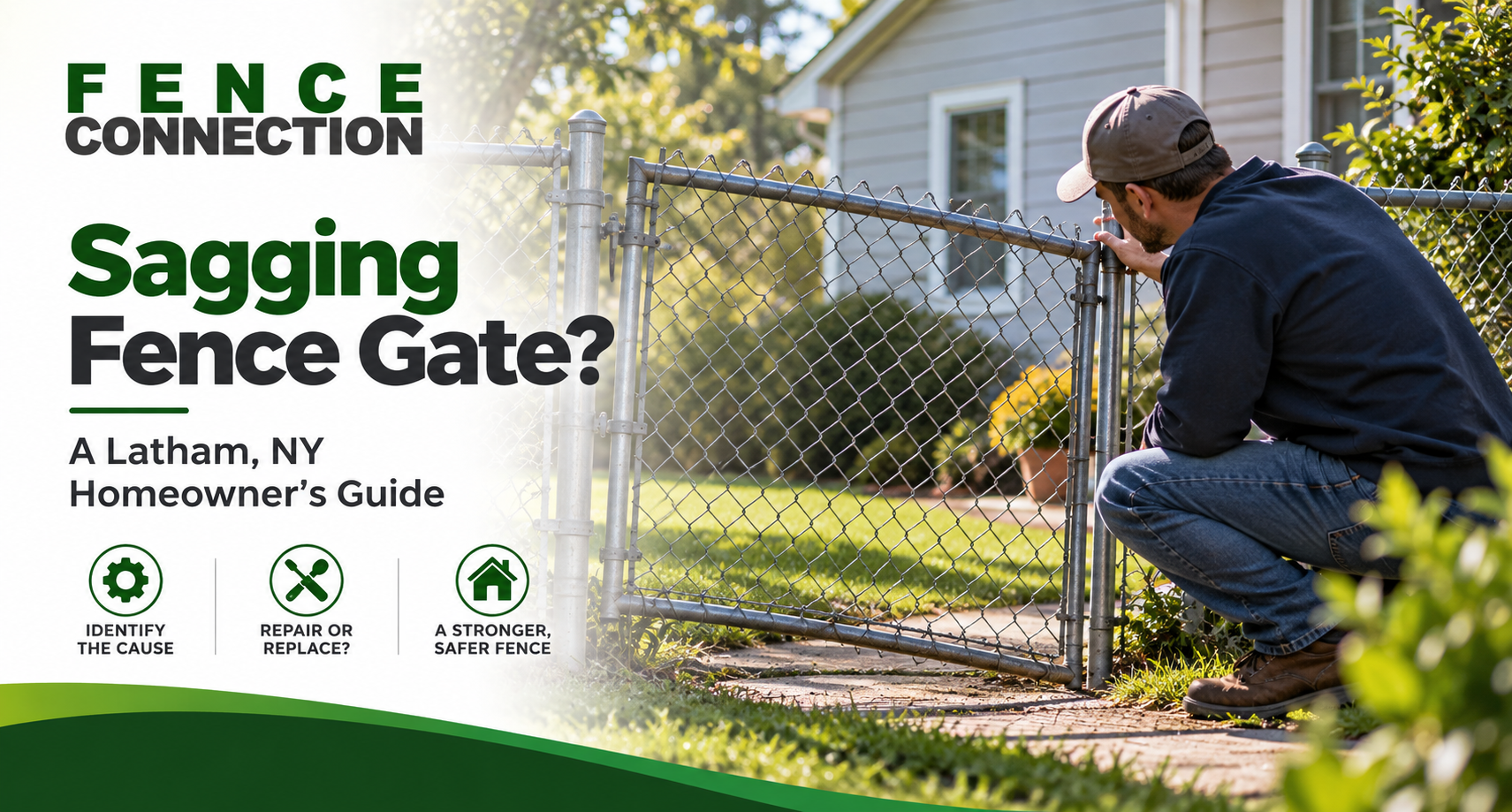
A fence gate is something homeowners use almost every day, but it often receives little attention until it stops working properly. Maybe the gate begins dragging across the ground, the latch no longer lines up, or you have to lift the gate slightly just to close it. These are common signs of a sagging fence gate.
While a sagging gate may seem like a small inconvenience, it can affect security, accessibility, and the overall condition of your fence. For homeowners in Latham, NY, understanding why gates sag can make it easier to decide whether a simple adjustment, professional repair, or larger fence improvement is needed.
Why Do Fence Gates Start to Sag?
Unlike a fixed fence panel, a gate is constantly moving. Every time it opens and closes, its hinges, posts, frame, and hardware experience stress. Over time, small changes can affect alignment.
A gate may sag because hinges have loosened, a supporting post has shifted, hardware has worn down, or the gate frame is no longer square. Heavier or wider gates can place additional pressure on their supporting components.
Seasonal ground movement can also play a role. In New York, changing temperatures and freeze-thaw conditions can affect soil around fence posts, which may gradually change their position.
Look at the Gate Post First
When a gate starts dragging, many homeowners immediately focus on the gate itself. However, the supporting post is equally important.
If the post is leaning or moving in the soil, adjusting the latch may only provide a temporary solution. The gate can quickly become misaligned again because the structure supporting it is still moving.
A properly installed fence depends on stable posts, appropriate materials, accurate alignment, and hardware suited to the gate. Fence Connection installs residential and commercial fencing throughout the Capital Region, including chain link, vinyl, ornamental aluminum, wood, and other fencing options.
Small Alignment Problems Can Become Bigger
A gate that is slightly out of alignment may still open and close, making it tempting to ignore the problem.
However, repeatedly forcing a misaligned gate can put additional stress on hinges, latches, posts, and the frame. A gate dragging against the ground can also become increasingly difficult to operate.
Pay attention to changes such as an uneven gap around the gate, a latch that suddenly becomes difficult to use, loose hinges, visible post movement, or a gate that swings open or closed by itself.
These signs can help identify a developing problem before the gate becomes unusable.
Why Professional Installation Matters
Good gate performance begins when the fence is installed. The gate opening needs to be properly planned, posts must provide adequate support, and hinges and latches need to be positioned correctly.
The article on the Benefits of professional fence installation Latham, NY explains how professional installation can contribute to proper alignment, secure gates, straight fence lines, and better long-term performance.
This is particularly important for frequently used gates or larger openings where additional weight puts more stress on the supporting structure.
Does Fence Material Affect Gate Performance?
Yes. Different fencing materials have different weights and structural characteristics.
A wood privacy gate, for example, may place different demands on its posts and hardware than a lightweight chain-link gate. Vinyl and ornamental fencing also require installation methods appropriate to their design.
The width of the opening matters too. A wider gate generally creates more leverage on hinges and posts than a smaller pedestrian gate.
This does not mean homeowners should avoid larger gates. It simply means gate size, material, hardware, and support should be planned together.
Can You Repair a Sagging Gate?
Not every sagging gate requires replacement.
If the issue involves loose hardware or minor alignment, adjustment may be possible. But if the supporting post has moved significantly, the gate frame is damaged, or several fence components are deteriorating, more extensive work may be necessary.
The key is identifying the actual cause rather than repeatedly adjusting the latch.
Homeowners should also be careful with heavy gates. Trying to reposition a large gate without the proper equipment or experience can create unnecessary safety risks.
Repair the Gate or Replace the Fence?
If the fence is otherwise in good condition, repairing the gate may be the practical choice. But when the gate problem is part of a much older or damaged fence, homeowners may want to compare repair with replacement.
Cost depends on several factors, including material, fence length, property layout, ground conditions, accessibility, gate requirements, and whether an existing fence needs to be removed. The guide to Fence installation cost Capital Region New York provides more information about the factors that can influence a fencing project’s overall cost.
Looking at the entire fence can prevent money from being repeatedly spent on one component when several areas are already approaching the end of their useful condition.
Think About How the Gate Is Used
A backyard gate used occasionally has different requirements from a driveway gate or an entrance used several times every day.
Before repairing or replacing a gate, consider who uses it, how frequently it opens, whether lawn equipment needs to pass through, and whether pets or children rely on the gate remaining securely closed.
These practical details can help determine the right width, material, hardware, and placement.
Final Thoughts
A sagging fence gate is more than an appearance issue. It can be an early sign of loose hardware, post movement, structural stress, or improper alignment.
For Latham homeowners, the best approach is to identify why the gate is sagging before deciding how to fix it. Sometimes a small adjustment is enough. In other situations, repairing a post, replacing hardware, or reconsidering part of the fence may provide a better long-term solution.
A properly functioning gate should open smoothly, close securely, and fit naturally into the rest of the fence. Addressing problems early can help keep the entire fencing system functional, secure, and easier to use.