
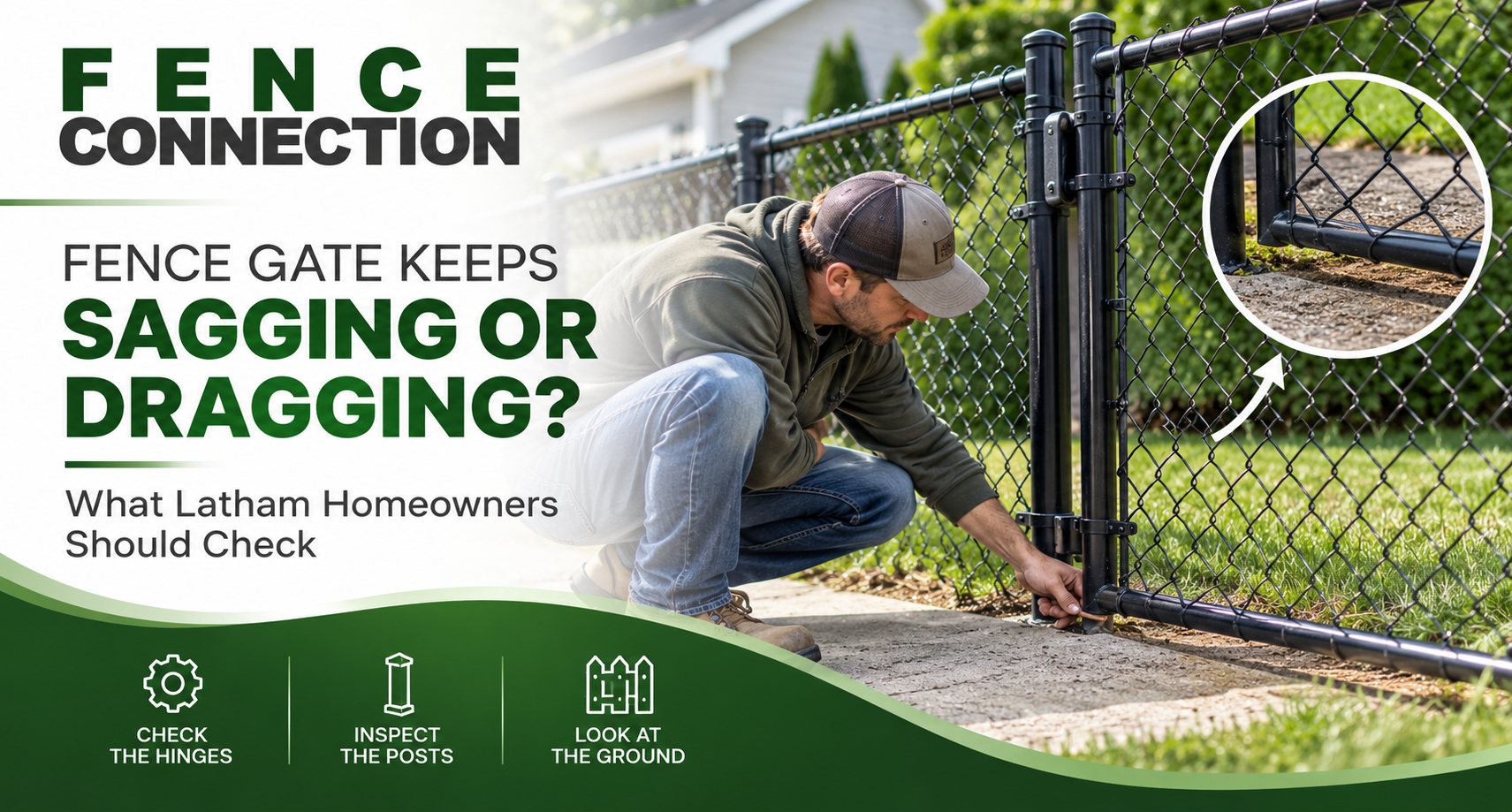
A fence gate should open and close smoothly without scraping the ground, sticking, or needing to be lifted into place. When a gate begins to sag or drag, it can quickly become frustrating. It may also make the fence less secure and put additional stress on the hinges, posts, and gate frame.
For Latham homeowners, a sagging gate does not always mean the entire fence needs replacement. Sometimes the problem comes from a loose hinge or changing ground conditions. In other cases, the gate post or frame may need professional attention. Understanding the possible causes can help you decide what to check first and when a repair may be necessary.
Start With the Gate Hinges
The hinges are one of the first places to inspect. Every time a gate opens, its weight puts pressure on the hinges and the post supporting them. Over time, screws, bolts, or other hardware can loosen.
Look at the gate while it is closed. If the side opposite the hinges sits noticeably lower, the hinges may have shifted or become worn. Rust, bent hardware, or loose fasteners can also affect alignment.
Minor hardware problems may be relatively straightforward to address, but repeatedly tightening the same hinge without identifying why it keeps moving may only provide a temporary solution.
Check Whether the Gate Post Is Still Straight
A perfectly good gate can begin dragging if its supporting post moves.
Gate posts carry more stress than many standard fence posts because they support the weight and movement of the gate. Soil settlement, moisture, freeze-thaw cycles, poor drainage, or changes around the post can gradually affect its position.
Stand back and compare the gate post with nearby fence posts. If it appears to lean, the issue may be deeper than the hinges. Fence Connection provides residential and commercial fencing services, making post stability and correct gate alignment important parts of the overall installation.
Look Closely at the Gate Frame
Sometimes the post and hinges are fine, but the gate itself has changed.
Wood gates can shift or warp as they are exposed to moisture and changing weather. Metal gate frames can become bent or damaged, while connections within a chain-link gate may loosen over time.
Check whether the gate still appears square. Look for bending, cracked components, loose connections, or areas where the frame seems uneven. A damaged frame may need adjustment or repair rather than simply changing the hinges.
Consider Changes in the Ground
A gate that suddenly begins scraping does not always mean the gate moved downward. The ground underneath it may have changed.
Soil can settle, while mulch, gravel, grass growth, landscaping materials, or frost-related movement can reduce the clearance beneath a gate. This is particularly worth checking when the gate operated normally before a landscaping project or seasonal weather change.
There should generally be enough clearance for the gate to move freely without creating an unnecessarily large opening underneath it. The appropriate clearance depends on the fence, terrain, and purpose of the enclosure.
Weather Can Affect Fence Alignment
Latham experiences changing seasonal conditions, and outdoor structures are continuously exposed to moisture, temperature changes, wind, snow, and frozen ground.
These conditions do not automatically damage a properly installed fence, but they can contribute to movement over time, particularly if drainage or soil conditions around a post are already problematic.
This is one reason the Benefits of professional fence installation Latham, NY go beyond simply making a new fence look straight. Post placement, measurements, hardware selection, gate positioning, and consideration of site conditions can all influence how the fence performs over time.
Don’t Ignore a Gate That Keeps Getting Worse
A gate that needs a small adjustment once is different from one that repeatedly falls out of alignment.
Pay attention to how quickly the problem develops. Does the gate start dragging again shortly after an adjustment? Is the post visibly moving? Is the latch becoming harder to line up? Are nearby fence sections beginning to lean too?
Repeated problems may indicate that the underlying cause has not been corrected. Continuing to force a dragging gate open can also place more stress on the frame and hardware.
When Is Repair Enough?
Not every sagging gate needs replacement. If the problem involves adjustable hardware or a minor alignment issue, repair may be possible.
However, significant post movement, extensive corrosion, severe warping, structural damage, or deterioration may make replacement a more practical option. The age and overall condition of the surrounding fence should also be considered.
A professional inspection can help determine whether correcting one component is enough or whether the gate and supporting structure require more extensive work.
Planning a New Fence? Think About the Gate Early
If you are replacing an old fence, gate placement should be part of the planning process from the beginning.
Consider how wide the opening needs to be, how frequently the gate will be used, whether lawn equipment must pass through it, and how the ground slopes around the opening. A larger or heavier gate may also require different structural support than a small pedestrian gate.
Material, terrain, access, fence length, gates, and other project details can also affect the overall Fence installation cost Capital Region New York. Thinking through these factors early can help homeowners understand the project more clearly before installation begins.
Final Thoughts
A sagging or dragging fence gate may seem like a small inconvenience, but it can be an early sign of a problem with the hinges, frame, supporting post, or surrounding ground.
Latham homeowners should start by checking the visible hardware, post alignment, gate frame, and ground clearance. If the gate continues moving out of position or the cause is not obvious, a professional assessment can help identify what is actually happening.
Fixing the underlying cause instead of repeatedly adjusting the gate can help restore smooth operation and support the long-term stability of the fence.